Showing posts with label prop 37. Show all posts

Thursday, October 2, 2014

Bought The Movie - GMOs, Big Pharma, Vaccines

Bought Movie | Jeff Hays FilmBought Movie | Your Health Brought To You By Wall Street:

Yekra Player

Yekra is a revolutionary new distribution network for feature films.

Bought

The hidden story about vaccines, autism, drugs and food… Americas health has been BOUGHT. Your health, your family’s health. Now brought to you by Wall Street… “If you thought they hurt us with the banks, wait till you see what they’re doing to health care.” Vaccines. GMOs. Big Pharma. Three big, BIG, okay… HUGE topics in one film. Why? Why not 3 films, why put all this in one movie? Great question, 2 answers. 1st and most importantly: We need to band together. We need a mainstream film, not another radical movie that only interests the “already converted”. Over 5 million people supported Prop 37 in CA. Reportedly, over 2 million w...ndustrialized food, our insane vaccine expansion, and our love affair with pharmaceuticals- it’s the same villain. It’s a risky story to tell, but would be a tragedy to passively consent to with silence. There is something horribly wrong with health care today. Huge money, billions and billions of dollars flowing into the same pockets. Meanwhile, MD’s aren’t being allowed to actually practice the art of medicine and anyone who questions vaccination safety, pharmaceuticals, factory farms, etc. is ridiculed and belittled. Meanwhile, the billions keep flowing, carried on a river of pain and anguish. Huge corporations funded by individual misery, one broken life at a time. Three huge stories, each worthy of multiple films, but each brought together by one staggering fact: it’s the same villain. These three story lines converge on Wall Street, in a tale of corruption, greed and shocking lack of conscience.


Bought is a film about the issue of health being sold out from underneath individuals through big pharmaceutical companies (Big Pharma), dangerous vaccinations and a food supply chain contaminated by the use of GMO’s. This film has the support of some of the world’s most acclaimed experts in research, medicine, holistic care and natural health. Based upon the film’s trailer, it has been dubbed controversial by media outlets even though it focuses on educating the public and arming people globally with the truth and facts about Big Pharma, vaccines and the food supply.

Film backers believe each person has a right to be informed about the truth and empowered by the
facts in order to make educated decisions about their own health, food and medicine. Bought – a film about how Americans’ health, food and our children’s health have been sold out from underneath of us.

Monday, July 7, 2014

The Oregon Labeling of Genetically-Engineered Foods, Measure 27 (2002) - Arguments in Opposition

Measure 27 - Arguments in Opposition:


Measure 27 Would Create
a Regulatory Nightmare
for Oregon Restaurant Owners
Measure 27 would force Oregon restaurant owners to provide special warning labels with thousands of menu items served each that aren't 100% "organic." Organic food companies are promoting the labeling scheme, to try to give themselves a competitive advantage over conventional food producers.

State officials estimate regulating
restaurant food labels will cost
nearly $9 million a year.
State officials estimate the Oregon Department of Agriculture will have to monitor more than 400,000 menu items served in Oregon restaurants, actually auditing 100,000 of those items, then sampling and testing 20,000 of them. State restaurant monitoring and inspections will cost the state nearly $9 million per year with nearly $3 million in start-up costs.

Measure 27 would also cost restaurant owners millions more. Restaurants would face a complicated new burden ­ special record keeping and research to track and determine the origin of virtually every product or ingredient used in any dish we serve. Staff time and costs would be passed on to Oregon consumers through higher prices. On top of that, we'd face huge fines and even jail terms if we accidentally use the wrong labels.

Many basic foods would require costly labels.
Basic food items like bread, dairy products, meats and many beverages, would require Measure 27 labels reading "Genetically Engineered," even if they don't contain any genetically engineered ingredients. The labels would be useless. They are just intended to scare consumers away from "non-organic foods" -- even though they are just as safe as "organic" products.

On behalf of all the members of the Oregon Restaurant Association, I urge you to say NO to the Co$tly Labeling Law.

Please Vote NO on Measure 27.
Bill McCormick, President
McCormick & Schmick's Restaurants

(This information furnished by Bill McCormick, Oregon Restaurant Association.)


Measure 27 Shifts Funds from Short-Changed Schools
to Pay for a Meaningless New Food Labeling Bureaucracy.One Teacher's Concerns about Measure 27.
As a teacher, I'm painfully aware of how Oregon's economic slump has forced budget cuts in schools across the state, including where I teach.

At a time when Oregon is struggling to find funds for schools, Measure 27 proposes to create a new state bureaucracy ­ costing taxpayers more than $118 million over the next 10 years ­ to put meaningless labels on foods that aren't 100% "organic."

Schools Would Have to Put Labels on Food and Beverages Served in School Cafeterias, Vending Machines and Concession Stands
To add insult to that injury, Measure 27 is so poorly written that it would require schools like mine to label foods and beverages served in the school cafeteria, in vending machines on school property and at concessions stands during athletic events.

Measure 27 is another example of initiative activists forcing Oregon voters to decide on an innocent-sounding proposal with huge, hidden impacts on government programs, taxpayers and consumers.

When Oregon's economy is sour, proposals like this are even more damaging. School costs make up nearly half of state budget expenditures. So nearly half of Measure 27's costs are likely to come from funds that otherwise would be available to pay for teachers, textbooks and testing ­ all of which have been cut in the current budget crisis.

Measure 27 Is a Right-to-Learn Issue
Backers of Measure 27 claim it's a right-to-know issue, but in fact the information on the labels it requires would be misleading and useless to consumers. I think of Measure 27 as a right-to-learn issue. I believe my students have a right to an adequately funded education. Their right to learn should be the state's top funding priority ­ not some new bureaucratic program designed to further one group's political agenda.

Kraig Hoene
High School Social Studies Teacher

(This information furnished by Kraig J. Hoene.)


  • The Environmental Protection Agency, Food and Drug Administration and Oregon's Department of Agriculture manage the Federal system of food safety through intense, continual scrutiny. Thousands of university-based, publicly financed research projects provide basis for protection of food and fiber supplies.
  • The consequential loss of jobs, livelihood and tax revenue adds burden to the remaining taxpayers to carry the burgeoning costs of a la carte ballot measures such as Measure 27. By Department of Agriculture estimates, Measure 27 will add $118 million to our already oversized general fund expenses through 100,000 inspections and by adding 60 new staff positions.
  • 4. Consumers would pay higher food costs. In fact, a recent study estimated that Measure 27's labeling scheme would cost an average family of four an additional $550 a year
  • Studies show that, by forcing many common food products to be repackaged or remade with higher-priced ingredients, Prop 37 would cost the average California family hundreds of dollars more per year for groceries.
  • Ultimately, consumers will pay for this through higher costs at the grocery store. In fact, a separate economic study concluded that forcing products to be repackaged or remade with higher priced ingredients would cost the average California family up to $400 per year in higher grocery costs.
  • The average family of four would be forced to shoulder an average of $500 in additional food costs each year and could be as high as $800 per year. (New York)

Wednesday, November 20, 2013

Video: Next Meal: Engineering Food | The First Five Minutes

Video: Next Meal: Engineering Food | Watch QUEST Online | KQED Video:


This is a log of the first five minutes of the Qwest produced Next Meal:  Engineering Food, a 26 minute report (see above video) that was re-scheduled to broadcast on the PBS Seattle station KCTS at the end of the 2013 Washington State election. This post was created for the article "Did Seattle PBS Station Sway Voters To Reject GMO Labeling Initiative?" to determine if the National Science Foundation funded program is a balanced journalism piece or a biotech infomercial.  

NOTE: This is a work in progress and will be up updated over the next couple of days. 

I am seeking individuals to log 2-5 minute sections of this report. If you want to help log, please post what you are doing in the comments so we don't have people duplicating efforts. Post your log in comments.


00:00-00:19 - Quest:  The Science of Sustainability Intro Screen
00:20-00:51 - Sponsors: The National Science Foundation (two-year, $2.5 million grant), The Follis Family Fund; Mary Van Voorhees Fund; S. D. Bechtel, Jr. Foundation; The David B. Gold Foundation; The Dirk and Charlene Kabcenell Foundation; The Vadasz Family Foundation; Wyncote Foundation; Amgen Foundation; and the members of KQED.
New QUEST Host Simran Sethi
00:52-01:16 - Video: Host: Simran Sethi (Photo) introduces Next Meal in a corn field. Sound: The business of growing foods has always been tough. Food scarcity around the world is a reality


01:17-01:33 - Video; B-Roll Tractor with hay, little sorghum embryos being plucked out of the immature seeds in lab (Photo), rice in lab, scientist in lab Sound: Voice over
01:33-01:39 - Jump Cut To Simran Sethi  in Corn Field
01:40-01:49 - Title Screen: Next Meal Engineering Food Video: Chemical Farm Field Sound: helicopter, organ music
01:50-01:53 - Video: Santa Cruz, California Board Walk. View From water Sound: helicopter, music, sea gulls, Prop 37 marchers
Prop 37 rally
Tom Llewellyn, a volunteer with the Proposition 37 campaign, chants at a rally in Santa Cruz on Nov. 4, 2012, two days before the election. Prop 37 lost with 49 percent of the vote. Credit: Gabriela Quirós, KQED

01:54-02:32 - Video: Prop 37 supporters with signs walking in street (Photo), at rally, fishy corn car Sound: People Chanting "It is our right to know" Rally Speaker: "Our citizen's have the opportunity to be the first citizens in the United States to have the options as to whether or not to eat GMO foods. And I am very excited about this."

02:33-02:41 - Video: Talking Head, Tarah Locke, GMO Free Santa Cruz (Photo) on the street "It is about citizen's against chemical and junk food corporations" (More)
02:42-02:49 - Prop 37 TV Ad: "Monsanto & Dow Shouldn't Be Able To Hide That They Are Genetically Engineering Our Food..."
02:50-02:51 - Voice Over Prop 37 TV Ad: "What I didn't like about it....

02:52-03:00 - Video: Talking Head, Philip Bowles, Alfalfa Grower Bowles Farming Co. (Photo) (Point: Prop 37 Supporters wanted to stop GMO Food) Video Background: Hay Barn
03:07-03:33 - No On 37 TV Ad (Voice Over: Prop 37 did not win, but....)
03:34-03:40 - Video: Fishy Corn Car, Prop 37 supporters walking on sidewalk
03:39-03:50 - Video: Experimental Corn Field Voice Over: We have been "tinkering" with the growing of food for thousands of years.

03:54-04:10 - Video: Talking Head Eduardo Bluwald, Molecular Biologist University of California, Davis (Photo) “The ancestors of tomatoes were the size of my thumb and they tasted very bad,” said Eduardo Blumwald, “And breeding gave us what we have right now.”
04:11-04:20 - Video: Close-up of "Classic Breeding"
sorghum
04:25-04:37 - Video: Talking Head Peggy Lemauz, Plant Biologist University of California, Berkeley (Photo Credit: Arwen Curry, KQED) “Classical plant breeding involves taking the female eggs from one plant and bringing them together with the male parts of another plant,” said Peggy Lemaux, plant biologist at the University of California at Berkeley. “And then all that genetic information gets mixed up. Half of the information in the progeny – or children – of that cross comes from the mother and half comes from the father. And it just all gets mixed up.”
04:38-04:58 - Video: Farmer opening seed bags in field, papaya sliced down the middle showing seeds Voice Over: Since Monsanto introduced GMO foods in the 90's.... How safe are GMO Foods? Do they harm the environment? How badly do we need them?
04:59-05:03 - Video: Farmers pouring seeds into yellow bins Voice Over: It was a huge blunder how this technology was rolled out...

05:04-05:21 - Video: Talking Head Philip Bowles, Alfalfa Grower Bowles Farming Co. (Point:  We want to trust our food.)

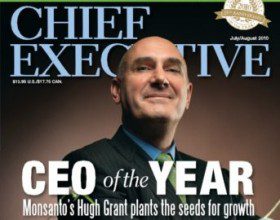
05:22-05:28 - Hugh Grant CEO, Monsanto Co at the 2010 Business Social Responsibility Conference in New York (Point: It is because GMO were new...it brought controversy with it.)


During the first 5+ minutes of the Quest produced "Next Meal:  Engineering Food", a 26 minute report that was re-scheduled to broadcast on the PBS Seattle station KCTS at the end of the 2013 Washington State election, Tarah Locke, the GMO Free Santa Cruz organizer, was given eight seconds on the 2012 National Science Foundation funded program during which five biotech supporter clips were featured. 

As the log highlights, thirty one seconds were devoted to "GMO Skeptics" in the first five minutes of the program that swayed Washington State voters to vote against knowing what is in their food. 

Is the Next Meal objective journalist or a biotech infomercial?
Did the re-scheduled program play a major role in defeating Initiative 522? 
More information: about.me/nextmeal

Why do a shot list of the Next Meal program?
  1. Compute the time given to both sides: GMO Skeptics .31 seconds: Interview (.08) , TV Ad (.07), B-Roll (.16)...Rally: .36 seconds
  2. See who was interviewed and what their background? 
  3. How were GMO Skeptics featured? One
  4. How were GMO Supporters featured? Four (Farmer Philip Bowles twice)
  5. To determine how music and voice overs were used to transition from one segment to another.
  6. To evaluate the attempt to sway emotional opinions
  7. Is the program biased?
  8. It the program follow the journalism code of ethics and standard practices or is it a biotech infomercial? 
  9. It supports the article "Did Seattle PBS Station Sway Voters To Reject #GMO Labeling Initiative?" that the Next Meal is biased toward biotech and the efforts to stop GMO labeling campaigns.
The Next Meal aired on KCTS Seattle Wednesday Oct. 30th 7:30pm and 11 pm,  
Monday night Nov. 4th, Tuesday night Nov. 5th.

Saturday, November 16, 2013

Next Meal: Engineering Food Survey


In this half-hour special, QUEST Northern California explores genetically engineered crops in the wake of Proposition 37, the 2012 ballot initiative that would have required foods containing genetically engineered ingredients to be labeled in California.


  1. Is the "Next Meal" a journalistic piece that explores the science behind genetic engineering while including multiple perspectives on the issue? 
  2.  What are the multiple perspectives "Next Meal" delves into regarding GMO food and the impact it has on the environment, animals, farmers, children and people? 
  3. Are the benefits of genetically engineered foods worth the risks? 
  4. What are the risks of GMO foods that are explained in "Next Meal"? 
  5. What does the future hold for research and regulations such as labeling? 
  6. Do you believe that the viewpoint of farmers who grow GM crops were evenly represented?
  7. Do you believe that people with no background in the GMO issue would have a positive or negative view of Bio-Technology after watching this informational report? 
  8. If the "Next Meal" was shown days, hours before the end of an election (like in WA), do you believe the 30-minute program would persuade public opinion to vote in favor or against GMO food labeling? 
  9. As defined on Wikipeda, did "Next Meal" follow Journalism ethics and standards of truthfulness, accuracy, objectivity, impartiality, fairness and public accountability? If your answer is "no", please elaborate.
 Please post your answers in the comments below.

Notes: Write or call Michael Getler, PBS Ombudsman, at 703-739-5290.

Tuesday, September 10, 2013

Howard Vlieger & Pamm Larry Upcoming Events in Washington State!

Grassroots Volunteers for I-522 & Washington State is Proud to Welcome

Howard Vlieger - Iowa Farmer and GMO Crop Expert &
Pamm Larry - Initial Instigator of Prop 37 in California
Howard and Pamm will be touring the state during the month of September educating the public about GMOs and talking to folks about I-522 and the importance of labeling. Please see the schedule below and come join us for one or more events. Also, feel free to share the calendar and list of events to local groups, family, friends, etc!

SPECIAL EVENT with Both Howard & Pamm!

~ Sunday, September 15th - 6-9pm! ~
Special Event for Howard & Pamm w/ Local Volunteers & Organizers

Where: Blakeley Manor - Community Room - 2401 NE Blakeley St, Seattle 98105
What: This will be a GMO-Free potluck and party to honor Howard & Pamm for coming to our fine state to educate people, support labeling and ballot initiative 522. ALL volunteers & organizers working on the GMO issue are welcome to come join the party!

Please see below for a list of ALL major events and bios for Howard & Pamm!

Schedule is subject to change & events are still being added.
Pamm still has available time to fill, mostly during the day, so all help is appreciated to make the most of her limited time her in Washington. 

(*Apologies if you received this email more than once. We combined email lists.)

Howard - Main Events:
~ TONIGHT! September 10th ~
Skagit Valley Food Co-op - 6:30-8pm
202 South First Street Mount Vernon, WA 98273

~ September 11th ~
Olympic College - 6:30-8:30 pm
 Sponsored by Kitsap Community Food Co-op
Bremerton Student Center 1600 Chester Ave Bremerton, WA


~ September 12th ~
Shelton Timberland Library - 12-2pm
710 W. Alder St, Shelton, WA

Lacey Timberland Library - 3-5pm
500 College Street SE, Lacey WA

The Grange Building - 6-9pm
Sponsored by The Yelm Cooperative 
302 E Yelm Ave, Yelm WA


~ September 13th ~
Vancouver Community Library - 6:30-8:30pm
901 C Street, Vancouver, WA


~ September 14th ~
Republican Booth at WA State Fair - 10am-12pm
Washington State Fair Events Center, 110 9th Ave SW Puyallup, WA 98371

Sumner Animal Grub - Ice Cream Social w/ Ben & Jerry's Ice Cream - 4-5:30pm
800 Traffic St, Sumner, WA

Fire Station #66 - South Hill  6:30-8pm
Sponsored by TNT Wellness Consulting
9813 128th Street East, South Hill, WA


~ September 15th ~
Blakeley Manor - 3-5pm
Sponsored by Volunteers for I-522 Seattle
Community Room - 2401 NE Blakeley St, Seattle 98105
Special Event for Howard & Pamm w/ Local Volunteers & Organizers - 6-9pm
Blakeley Manor - Community Room - 2401 NE Blakeley St, Seattle 98105

Pamm - Main Events:

~ September 15th ~
Pamm arrives in Seattle!

Special Event for Howard & Pamm w/ Local Volunteers & Organizers - 6-9pm
Blakeley Manor - Community Room - 2401 NE Blakeley St, Seattle 98105

~ September 16th ~
Brickhouse Tavern - 2-3:30pm
109 W 15th St Vancouver, WA 98660

Traditions Café - 7-9pm
Sponsored by Traditions Fair Trade 
300 5th Ave SW, Olympia WA 98501     


~ September 17th ~
Lacey Timberland Library - 11am-2pm
500 College Street SE, Lacey WA

The Grange Building - 6-9pm
Sponsored by The Yelm Cooperative 
302 E Yelm Ave, Yelm WA 98597


~ September 18th ~
GMO OMG Film Screening at Seattle Art Museum - 7-9pm
Seattle Art Museum 1300 1st Ave Seattle, WA 98101

~ September 19th ~
GMO Labeling Fundraiser Concert with The Refusers - 7-11pm
The Crocodile - 2200 2nd Ave Seattle, WA 98121


~ September 20th ~
Quimper Universalist Unitarian Fellowship  - 7-8:30pm
Sponsored by The Green Sanctuary Committee
2333 San Juan Ave Port Townsend, WA 98368


~ September 21st ~
Nash's Farm Store - 1:30-3pm
4681 Sequim-Dungeness Way, Sequim WA

Peninsula College - 6:30-8pm
1502 E Lauridsen Blvd Port Angeles, WA

GMO OMG Move Screening - 9-11pm
Port Townsend Film Festival - Rose Theater
235 Taylor Ave, Port Townsend, WA


~ September 22nd ~
GMO OMG Screening - 6-8pm
Port Townsend Film Festival - Peter Simpson Free Cinema
(The American Legion Hall) 209 Monroe St.


~ September 23rd ~
Fairhaven Public Library - Bellingham - 6:30-8pm
1117 12th Street Bellingham, WA 98225


~ September 24th ~
Skagit Valley Food Co-op - 6:30-8pm
202 S. First St Downtown Mount Vernon, WA 98273


~ September 25th ~
Green Party of Seattle - 7:30-9pm
Phinney Neighborhood Center - 6532 Phinney Ave N, Seattle, WA 98103 
Limited seating - Get free tickets at: http://www.brownpapertickets.com/event/461480


~ September 26th ~
Third Place Commons - 7-8:30pm
Sponsored by Sno-Isle Food Co-op & Volunteers for I-522 Seattle
17171 Bothell Way NE Lake Forest Park, WA 98155


~ September 27th ~
GMO OMG Movie Screening - Seattle International Film Festival (SIFF) - 7-9pm
305 Harrison St  Seattle, WA 98109


~ September 28th ~
Bellevue/Eastside Event TBA

~ September 29th ~
   Work Party & Potluck for March For Your Food/March Against Monsanto 12-3pm
Sponsored by Volunteers for I-522 Seattle
Blakeley Manor Community Room - 2401 NE Blakeley St, Seattle 98105


~ September 30th ~
Fire Station # 71 - Puyallup - 7-8:30pm
Sponsored by TNT Wellness Consulting
902 7th Street NW, Puyallup WA


~ October 1st ~
Fundraiser featuring Pamm Larry & Jeffery Smith
Sponsored by Marlene's Market
2565 S Gateway Center Plaza Federal Way, WA 98003

~~~~~~~~~~~~~~~~~~~~~~~~~~~

About Howard Vlieger
Howard Vlieger is a third generation family farmer who has been a “student of the soil,” studying why and how the soil works as it does, since 1989.  Howard lives on the family farm where he was born and raised in northwest Iowa. He assists his son with some of the farming duties.  Since 1992 Howard has been a crop nutrition advisor and has founded two companies to help family farmers reduce their dependency on chemical- based farming and transition to biological and or organic production.  Howard works and teaches as an independent crop nutrition advisor, helping crop and livestock farmers all across the US.
Howard also works with scientists and researchers around the world to develop effective solutions, based on the latest science, for the real-life problems farmers are experiencing because of GMO crops and the chemicals used in growing them. Howard is a co-author and the primary coordinator of a first of its kind scientific study: the feeding of GMO grain and non-GMO grain to hogs for their lifetime as a meat animal.  Howard is an internationally recognized speaker on the topic of GMOs. He believes people deserve to be educated and know what is in their food.  
Howard serves on the board of directors of the Farm & Ranch Freedom Alliance (FARFA) and the Council for Healthy Food Systems (CHFS). He is a strong conservative and for many years has been a delegate for his county to the Iowa State Republican Convention. His greatest accomplishments are being a Christian husband for 32 plus years to his wonderful wife Pam and father to three young adult children & a proud grandfather of one. 
About Pamm Larry
Pamm Larry, farmer, midwife, businesswoman and a gutsy grandmother of three was so distraught about our modern day food system that she quit her day job and spent her time educating herself on GMOs and how to apply for a ballot initiative. She then went on the road and heard a resounding YES from the people in California to pursue a Ballot Initiative. This effort resulted in the Yes On Prop 37, California Right To Know Campaign of November 2012. 
Grandma Larry and her galvanized cadre of concerned citizens represent the sane, spirited voice of a growing number of skeptical Americans who don't necessarily trust better living through chemistry and who demand labeling of genetically modified foods. 

Sunday, August 18, 2013

I-522 GMO Grassroots Groups Organize September Speaking Tour For Grandmother Pamm Larry and Farmer Howard Vlieger

Press Release:

I-522 GMO Grassroots Groups Organize September Speaking Tour For Grandmother Pamm Larry and Farmer Howard Vlieger


SEATTLE, WA (August 19, 2013) Washington grassroots volunteers for I-522 have asked Pamm Larry, the initial instigator of the genetically engineered labeling act in California, and Iowa Farmer Howard Vlieger (R) to participate in a statewide speaking tour in September to educate voters on GMO Food Labeling issues and help organize the grassroots troops. Annmarie Gianni Skin Care and Good Earth Natural Foods are funding the fall tour.


“Having Pamm Larry come to Washington to help with I-522 is a no-brainer.  She started the GE Labeling initiative movement, and I-522 wouldn't be on our Washington state ballot this November if it weren't for Pamm's efforts in California last year,” explains Sarah Stolar, a coordinator of Volunteer’s for I-522.  “She has been through ALL of this already, so both grassroots groups and the Yes on 522 campaign have a lot to learn from her.  We do not need or want to waste energy reinventing the wheel; we need to take the valuable lessons learned from California's experience and use them to improve our own work.  Learning from California's Prop 37 and not repeating the same mistakes is the only way we can successfully pass I-522.  Who better to help guide the way than Pamm Larry?”


“Washington will finish what Prop 37 started but was waylaid by Chemical and Junk Food Companies in their campaign of misinformation and distractions from the issue which is labeling of our foods,” explains Pamm Larry, Grandmother of three and Label GMO Food movement initial instigator. “We have a right to know what we are buying and feeding our children and ourselves. I-522 is the next step and is everyone's ballot initiative.  When we all unite no matter where we are from, we are a powerful force.  California Grassroots stand with the people of Washington in continuing the fight for the right to know what's in our food.  We will do all we can to assure victory there. I am delighted and honored to have the opportunity to join hands with the people of Washington to let them know about our oppositions dirty tactics in California during Prop 37.   We are uniting across state lines because this isn't just about Washington- it's about all of us. No matter what city, state, or country we live in, every step we take anywhere for food sovereignty is a step for all of us.”


“I have been involved with research and testing of GMOs since 1994. I have seen the damage caused by GMOs at ground level,” says Howard Vlieger, “What is happening to the soil, the crops, the livestock and sadly now the children and people. Can we really believe what we are being told by the companies that say GMOs are the way of future for food production or is there more to the story? Are you willing to bet the future of your farm and the health of your family on the word of GMO companies without exploring the rest of the story for yourself?”


"Every action and decision that we make as individuals and as a company will have an impact on the environment, “states Rachel Pachivas, Annmarie Gianni Skin Care. “We strive to make this as little of an impact as possible. We search out for the best and most sustainable sourcing in everything we do. From the paper that our letterhead is on, to the oil that makes its way onto your skin, there is careful and conscious thought that goes into every decision made. We actively support LabelGMOs and the movement around these issues. A few of us here in the company had volunteered during Prop 37 in California and know how inspiring Pamm Larry is, so of course... we are happy to help her get up to Washington and support I-522. A victory in Washington will be monumental for the food movement... it's time we stand up to Ag-Biotech industry and demand we know what they are putting in our food!”

About Pamm Larry

Pamm Larry, farmer, midwife, businesswoman and a gutsy grandmother of three was so distraught about our modern day food system that she quit her day job and spent her time educating herself on GMOs and how to apply for a ballot initiative. Next, she searched out her team and went straight to the state capital to painstakingly navigate through the bureaucratic muddle of tedious paperwork necessary to put an initiative on the California ballot.

Grandma Larry and her galvanized cadre of concerned citizens represent the sane, spirited voice of a growing number of skeptical Americans who don't necessarily trust better living through chemistry.

Article: 


About Howard Vlieger

Howard Vlieger is a third generation family farmer who has been a “student of the soil,” studying why and how the soil works as it does, since 1989.  Howard lives on the family farm where he was born and raised in northwest Iowa..   Since 1992 Howard has been a crop nutrition advisor and has founded two companies to help family farmers reduce their dependency on chemical-based farming and transition to biological and/or organic production.  Howard also works with scientists and researchers around the world to develop effective solutions, based on the latest science, for the real-life problems farmers are experiencing because of GMO crops and glyphosate. Howard is a co-author and the primary coordinator of a first of its kind scientific study: the feeding of GMO grain and non-GMO grain to hogs for their lifetime as a meat animal.  Howard is an internationally recognized speaker on the topic of GMOs.

Annmarie Gianni Skin Care

Annmarie Gianni Skin Care is an organic skin care line using 100% natural, certified organic, and wild-crafted ingredients. The team strives to bring their ideals into the eyes of the community. They believe knowledge is power and they love providing information to others on organics and wild-crafting, truth in labeling and transparency, and giving back to the community.

About Yes on 522

Yes on 522 provides Washington shoppers with more information about what’s in the food they buy so that they can make the best decisions for their families. More than 350,000 signatures were collected to get I-522 on the November 2013 ballot—second highest number of signatures gathered for an Initiative to the Legislature in state history.  www.yeson522.com

Wednesday, May 8, 2013

Next Meal: Engineering Food


In this half-hour special, QUEST Northern California explores genetically engineered crops in the wake of Proposition 37, the 2012 ballot initiative that would have required foods containing genetically engineered ingredients to be labeled in California. Prop 37 lost, but some 6 million Californians voted in favor of labeling, signaling that many aren't completely comfortable with genetically engineered food.

Are the benefits of genetically engineered foods worth the risks?
Funded by The National Science Foundation
Next Meal: Engineering Food explores how genetically engineered crops are made, their pros and cons, and what the future holds for research and regulations such as labeling.

Sunday, March 17, 2013

Moms Across America Founder: Label GMOs Because We Love Our Kids


Sustainable Pulse exclusive interview with Zen Honeycutt, Founder of Moms Across America, on their 4th July march against GMOs in towns across the US, children with allergies, Michelle Obama and much much more…

Why has Moms Across America decided to march to support GMO labeling on July 4th in towns across the US?
Because we love our kids. And we are using our “Mom Common Sense”. Over 19 animal studies have shown grave health concerns such as tumors akin to breast cancer, infertility, sterility, birth defects, miscarriages, obesity and organ damage, inflamed stomachs and autism-like symptoms. A recent corn study shows alarming differences and toxicity. Thanks to Jeffrey Smith’s “Genetic Roulette” and Robyn O’Brien’s Ted Talk “Patriotism on a Plate” we now know that GMOs not only have a host of health concerns but also cause unpredictable, unforeseeable and uncontrollable mutations in living things. This is unacceptable to us Moms, we have enough to worry about with diapers and tantrums…mutations? Really?

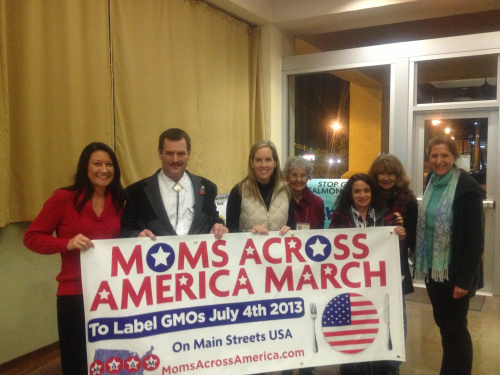
Seriously though, July 4th is our national day of celebrating our right to freedom. We are one of the only countries in the world that does not have the right to know what is in our food right now and we Moms have something to say about that. Home town parades make sense because everyone in town are there, it’s local, we can share in a fun way and the media cannot ignore us. In Carmichael, CA supporters marched in a 4th of July parade in big vegetable costumes last year and had a great time. It’s all about connecting with our communities.

After the failure of Prop 37 in California what gives you hope that GMO labeling bills in other states will work?
Prop 37 was a win in many ways. Pamm Larry led the way for over 6 million people to vote yes in just a few months. That’s huge. We know that labelling in other states will work the supporters are committed and because we Moms are not backing down. We buy 85% of the food. And if we don’t buy it, they can’t sell it. So we say “No Label? Not on our Table!” Senators, manufacturers and retailers are beginning to get that we want labels. We have the right to know what we feed our children. Opposition may have a lot of money, but we have the gift of gab. Their wallets are not bigger than the love for our children.

Read More:
Moms Across America Founder: Label GMOs Because We Love Our Kids

Wednesday, March 13, 2013

Quick message from Pamm Larry at Natural Products Expo West 2013


GMOs: Food, Money & Control: Part III | Buddhist Global Relief

GMOs: Food, Money & Control: Part III | Buddhist Global Relief

Despite pervasive human intervention, the dynamism of the natural world overcomes virtually all artificial boundaries and limits.  We directly experience nature’s refusal to stay within the lines we draw. Plants penetrate concrete sidewalks; moving water inexorably surmounts or breaks through barriers; nature retakes land abandoned by humans.

Seed dispersal and plant cross-pollination are examples of this dynamic movement in the natural world.  In fact, the plant world depends upon it.   The notion that we can control genetically modified organisms requires a willful blindness to this fundamental fact of nature.

“Guilty by GMO Contamination”

Genetically modified crop seed can contaminate other crops. Seed movement, pollen flow and other causes result in “gene flow”, the transfer of genes from one population to another.  This occurs in a variety of natural ways: via birds, animals, flooding, or wind.  It can also result from human activities such as farm or seed cleaning machinery, spillage during transport, and other human errors throughout the production process.

Transgenic contamination cannot be recalled.  Genetically modified plants continue to reproduce where the seeds are sown or blown and where plants are pollinated. Their traits are passed on to subsequent generations of crops. They also reproduce in nature where genetically modified varieties can forever alter wild relatives, native plants, and ecosystems.

Part I
Part II

Wednesday, February 27, 2013

Wait, That's GMO, Too? by Anna Minard - Seattle News - The Stranger, Seattle's Only Newspaper

Wait, That's GMO, Too? by Anna Minard - Seattle News - The Stranger, Seattle's Only Newspaper

I'm wandering the aisles of Central Co-op, a natural foods market on Capitol Hill, checking its shelves for genetically engineered foods. Once you know what to look for, it turns out those ingredients are everywhere—even here, among the fake meats and packages covered in leafy art, smiling animals, and hand-lettering. They're in the whole-grain bread, in the veggie burgers, in the peanut-free soy nut butter. You can't always tell from friendly labels—"100% natural," "multi-grain," "fair trade." But you may be able to tell soon.

Washington State will be voting in November on Initiative 522, which would require food made with genetically engineered ingredients (also known as genetically modified organisms, or GMOs) to be labeled as such at the retail level.

Still, the opposition to labeling is fierce. In November, Proposition 37, which would've mandated labeling of GMO foods, lost on the California ballot after the opposition dumped more than $45 million into a campaign arguing that labeling GMOs would be deceptive, pointless, and expensive. 

Wednesday, February 13, 2013

Support for Proposition 37 is slipping, poll finds - Los Angeles Times

Support for Proposition 37 is slipping, poll finds - Los Angeles Times

SACRAMENTO — An advertising blitz against Proposition 37 has slashed support for the genetically engineered food labeling initiative on next month's ballot and may endanger its prospects for voter approval, a new poll shows.

Proposition 37, which once was ahead statewide by more than a 2-1 margin, still leads 48.3% to 40.2% in the poll released Thursday by the Pepperdine University School of Public Policy and the California Business Roundtable. Undecided voters accounted for 11.5%.

But with 3 1/2 weeks left to go before the Nov. 6 election, pollsters now foresee a tightening race, as opponents continued a media blitz financed by $35 million in campaign contributions.

"This is a great example of the power of advertising," said pollster Chris Condon of M4 Strategies, which conducted the online survey of 830 likely voters from Sunday to Wednesday. Participants were asked to read the official ballot description and pro and con arguments before responding.

The new poll results marked a big change from previous polls that showed broad support for the measure, with some showing backing in the high 60% range. The poll took place just as a pair of televised anti-Proposition 37 spots hit the air.

"A lot of money has been poured into the No side, and the effect has been dramatic," Condon said. "It's down 19 points" since the previous biweekly poll.

Both sides of the Proposition 37 battle reacted predictably to the latest sounding.

The Yes campaign has been hurt by "10 days of incessant, pounding lies" on television, said spokeswoman Stacy Malkan, "but in the end, Californians will value knowing what's in their food, and we're confident they will vote yes on Proposition 37."

At the No on 37 campaign, spokeswoman Kathy Fairbanks said greater skepticism shown in the poll was the result of a combination of television advertising, news stories and newspaper editorials opposed to the measure. "The more people learn about Proposition 37, the less they like it," she said.

Should we require labeling of GMO foods? No

Should we require labeling of GMO foods? No

Source – The Sacramento Bee
Opinion – by Jamie Johansson
Date – Oct 4, 2012
Website – www.sacbee.com
Initiative would drive frivolous lawsuits

Proposition 37 is being promoted by its sponsors as a simple measure about food labels. But Proposition 37 is anything but simple. As a recent editorial in The Bee noted, Proposition 37 is “an overreach” and “even voters who worry about genetically modified food should reject Proposition 37.”

Proposition 37 is a poorly written measure that would increase food costs for families by $400 per year, would add millions in new government bureaucracy and red tape, and would establish a whole new class of shakedown lawsuits against family farmers and food companies like mine – without providing any health or safety benefits for consumers.

Proposition 37 amounts to a California-only ban of tens of thousands of perfectly safe, common grocery products containing genetically modified organism (GMO) ingredients, unless they are specially repackaged, relabeled or made with higher-cost ingredients.

A look at the fine print reveals provisions in Proposition 37 that go far beyond labeling.

For starters, Proposition 37 was written by a trial lawyer to benefit trial lawyers. It creates a whole new category of shakedown lawsuits, authorizing lawyers to sue farmers, food producers and grocers over the labels on food.

This hidden provision should come as no surprise. The proposition’s author is a well-known trial lawyer who has made millions suing small businesses under rules he helped write into another California proposition more than 20 years ago.

Proposition 37 is also full of politically motivated and nonsensical exemptions for foods than can contain GMO ingredients. For instance, the initiative requires special labels on soy milk, but exempts milk and other dairy products even though cows may be fed GMO grains. Foods sold in grocery stores require labels, but the exact same foods sold in a restaurant or deli are exempt. Pet foods containing meat require labels, but meat for human consumption is exempt. Food imported from foreign countries is exempt if sellers merely include a statement that their products are “GMO free.”

Unscrupulous foreign companies would surely game the system.

What’s worse, the measure has a confusing provision that would prohibit any food that is pasteurized, heated, dried, juiced or otherwise processed from being labeled or advertised as “natural.” This provision applies even if the processed food has no GMO ingredients whatsoever. For example, a bag of raw almonds would be considered “natural” and could be labeled as such. But if they are roasted and canned, they could no longer be called “natural.”

As an olive farmer, that means that just because I press my olives into olive oil, I would be prohibited from marketing my product as natural. Keep in mind GMO olives don’t exist. It puts me at a disadvantage to my competitors in other states and countries.

All told, Proposition 37 could result in $1.2 billion in higher costs for food processors and farmers, according to a new study by agricultural economics professors at UC Davis.

A separate economic impact study also determined that requiring food producers to relabel, repackage or remake thousands of common grocery products with higher-priced ingredients would increase the cost of food sold by as much as $5.2 billion per year. That translates to $350 to $400 dollars a year for each household.

That is not a small burden for Californians, especially in the midst of a prolonged recession.

Worst of all, Proposition 37 flies in the face of decades of scientific and medical research that has determined that GMO ingredients pose no health risk. In fact, we’ve been eating these foods for nearly two decades, and tens of thousands of common foods are made with ingredients from biotech or genetically engineered crops. Trillions of servings of these foods have been eaten with not a single confirmed health incident.

The National Academy of Sciences, the World Health Organization, the American Medical Association and other respected scientific bodies have endorsed GMO foods as safe. The Food and Drug Administration says labeling policies like Proposition 37 would “be inherently misleading.”

And the American Medical Association voted in June to adopt this policy position: “There is no scientific justification for special labeling of bioengineered foods.”

Doctors, scientists and agriculture experts, along with business and taxpayers groups and farm bureaus representing regions across California, all agree: Proposition 37 is a bad law that will increase costs for consumers and taxpayers and harm family farmers and small businesses.

Let’s not impose a cartload of new costs and red tape just to make a few trial lawyers a little richer.
Vote no on Proposition 37.

 Jamie Johansson, an olive grower from Oroville, is second vice president of the California Farm Bureau Federation.

Sunday, February 10, 2013

Understanding the Science of Genetically Modified Foods


Recorded in Yelm, WA on September 15, 2012. Presented by the South Sound Seed Stewards and the Yelm Cooperative.

Sandra's (last name withheld by request) presentation is based on the book and DVD, "Genetic Roulette," written by Jeffrey M. Smith and presented by the Institute of Responsible Technology.

Synopsis of "Genetic Roulette:" When the US government ignored repeated warnings by its own scientists and allowed untested genetically modified (GM) crops into our environment and food supply, it was a gamble of unprecedented proportions. The health of all living things and all future generations were put at risk by an infant technology.

After two decades, physicians and scientists have uncovered a grave trend. The same serious health problems found in lab animals, livestock, and pets that have been fed GM foods are now on the rise in the US population. And when people and animals stop eating genetically modified organisms (GMOs), their health improves.

About the speaker:
Sandra earned a BS in Chemistry from the California Institute of Technology, and frequently speaks publicly about a variety of topics relating to health, healing and food, including: The Health Risks of Genetically Modified Foods, MSG and Aspartame, The Importance of Vitamin D, Clear the Confusion About Cholesterol & Fats, and To Soy or Not To Soy.

Friday, February 8, 2013

Washington activists pushing for new labeling requirements for genetically modified foods

Washington activists pushing for new labeling requirements for genetically modified foods | PRI.ORG

Washington State voters will get to pass judgment on a ballot initiative requiring food products that contain genetically modified organisms to be labeled accordingly.

The move comes on the heals of a similar measure in California, Prop 37, being defeated at the ballot box in November after fierce lobbying by the food industry.

Trudy Bialic, director of public affairs at PCC Natural Markets in Washington, says part of the controversy has been around labeling genetically modified salmon, which is about to gain FDA approval.

"The fishing industry doesn’t even want genetically engineered salmon approved. But if it’s approved, at least give them labeling to protect the identity, the integrity, and the value of the wild salmon industry that we have here — the commercial fishing industry," she said.

The labeling law, Bialic says, supports what fisherman and apple growers in the state are asking for.
But genetically engineered apples and wheat are already planted in the state.

Thursday, February 7, 2013

Warning: Your Valentine's Day Treats May Be Filled With GMOs - PR Newswire - The Sacramento Bee

Warning: Your Valentine's Day Treats May Be Filled With GMOs - PR Newswire - The Sacramento Bee

USNewswire/ -- What will you get for your loved one this Valentine's Day?  If genetically modified organisms (GMOs) in chocolates are not on your shopping list, you will want to know about GMO Inside's new push to get the nation's largest candy manufacturers—Hershey and Mars—to break up with GMOs in 2013.

GMO Inside, a campaign dedicated to advancing the right of consumers to know whether or not foods are genetically engineered, is calling on Hershey and Mars to either stop putting GMOs in Valentine's candy and other products … or to start labeling the products as containing GMOs. 

Hershey and Mars combined comprise nearly 70 percent of the U.S. chocolate market.  The two companies are not shy about their love affair with GMOs; together they spent more than a million dollars to oppose GMO labeling in California in the November 2012 election. Hershey is reported to have spent $518,900 to defeat Prop 37 and Mars spent $498,350.

The reason these companies oppose GMO labeling so strongly is due to the fact that GMO ingredients are in their sweets; a label would surely make a consumer think twice about eating their favorite candy bar.
For example, these popular candies contain the following GMO-risk ingredients: Reese's Peanut Butter filled Hearts (Hershey) contain sugar, soy lecithin, and cornstarch Hershey Hugs contain sugar, soy lecithin and corn syrup solids Valentine's Colored M&M's (Mars) contain sugar, soy lecithin, cornstarch, and corn syrup Valentine's Snickers (Mars) contain soy lecithin, corn syrup, sugar, and partially hydrogenated soybean oil

GMO Inside also released a "Valentine's Day Villains" shopping guide for consumers who want to avoid GMO treats for their Valentines. Go to www.GMOinside.org to get a list of candies to watch out for and also some non-GMO alternatives for your loved one.

Read more here: http://www.sacbee.com/2013/02/07/5172820/warning-your-valentines-day-treats.html#storylink=cpy

OCA Director Ronnie Cummins on the CA Label GMO Ballot Initiative Video


2011: Organic Consumer Association Director Ronnie Cummins video to OCA members to support California's "Right2Know" Prop 37.

Tuesday, February 5, 2013

Statewide GMO Labeling Initiatives Still Going Strong

Statewide GMO Labeling Initiatives Still Going Strong

Americans are increasingly in favor of more food labeling with an overwhelming percent of Democrats, Independants and Republicans in favor, according to the National Survey of Healthcare Consumers: Genetically Engineered Food published on Just Label It!

For more than 10 years, processed foods in the U.S. are made from genetically modified crops manipulated in laboratories. A movement to eliminate such ingredients in food has brought about awareness and posed questions regarding the negetive effects of biotechnology on human health and the environment. While some scientists say GMO doesn’t pose a threat to either, many state-initiatives bills and campaigns continue to try and reach legislation in an effort to mandate labeling at the federal level.

Washington and New Mexico are just two of the 30 states that are gaining ground on their current initiative to mandate labeling. But, with most of the remaining states also behind the movement through proposed bills and campaigns, the anti-GMO movement is far from over.

Arizona—GMO-Free Phoenix is a food activist group working to educate consumers on safe ingredients and increase the Non-GMO Tipping Point Network to see that the genetically modified foods and brands are put out of business.

Will a Federal Compromise on GMO Labeling Trump State Law, Forever? | Food Safety News

Will a Federal Compromise on GMO Labeling Trump State Law, Forever? | Food Safety News

Preemption simply means that a higher law trumps a lower law: so federal trumps state, and state trumps local. But in practice, it’s industry’s way of ensuring uniformity and stopping grassroots efforts. How I do know this? From years of experience of seeing it happen in various public health issues. It’s such a huge problem that the Robert Wood Johnson Foundation funded an entire project called “Preemption and Movement Building in Public Health” to educate advocates about how to handle it.

Here is the pattern: a grassroots effort builds over time to enact local or state laws (such as gun control, indoor-smoking laws, or restricting alcohol sales), and industry fights these efforts for years, until they can no longer win. At that point, industry lobbyists turn around and either get their own weak bill passed, or work with advocates to pass a compromise version. In exchange, this law will preempt or prevent any state or city from passing a different or stronger law. Forever.

No industry likes to deal with 50 different state laws, or even a handful of expensive state-level battles. We recently saw this exact scenario play out in the food movement, with menu labeling in chain restaurants. For decades, the restaurant industry successfully fought federal efforts to require calorie counts and other basic nutrition information on menus. Then over the last few years, numerous states and cities started enacting their own laws, much to industry’s dismay. Enter the compromise struck between the leading proponent of  menu labeling, the Center for Science in the Public Interest, and the restaurant industry: federally-required menu labeling for calories only, in exchange for all state and local laws being preempted, past and future. (See this document labeled “compromise endorsements” for the bill’s supporters, which include the Grocery Manufacturers Association, a leader of the No on Prop 37 campaign on GMO labeling in California.)

Now, almost three years after passage, we still don’t have federal menu labeling as the final regulations are stalled at FDA, while certain industry members fight it. We also no longer see states or cities taking up the issue, figuring the feds took care of it. See what I mean about stopping a grassroots movement in its tracks? Public health lawyer Mark Pertschuk noted: “the rapidly growing grassroots movement for meaningful menu labeling may never recover.” He also cites the irony of this 2009 memo from President Obama opposing preemption in all federal rule-making. The memo correctly notes: “Throughout our history, state and local governments have frequently protected health, safety, and the environment more aggressively than has the national government.”

Monday, February 4, 2013

Dr. Mercola Interviews Dr. Huber about Glyphosate


Total Video Length: 00:58:12
Download Interview Transcript
Internationally renowned natural health physician and Mercola.com founder Dr. Joseph Mercola interviews Dr. Don M. Huber, one of the senior scientists in the U.S about area of science that relates to genetically modified organisms (GMO). (Part 2 of 2)

By Dr. Mercola
Dr. Don Huber is an expert in an area of science that relates to the toxicity of genetically engineered (GE) foods.
(Alternative terms for GE foods include genetically modified (GM), or "GMO" for genetically modified organism.)

His specific areas of training include soil-borne diseases, microbial ecology, and host-parasite relationships.

Dr. Huber also taught plant pathology, soil microbiology, and micro-ecological interactions as they relate to plant disease as a staff Professor at Purdue University for 35 years.

In part one of this interview, Dr. Huber discussed the shocking discovery of a brand new organism in genetically engineered (GE) crops—an organism that has been clearly linked to infertility and miscarriage in cattle, horses, pigs, sheep, and poultry that are raised on GE feed.
In part one we began the discussion on the hazards of glyphosate, the active ingredient in Monsanto's herbicide Roundup, and its contribution to a new phenomenon referred to as "Sudden Death Syndrome" (SDS).

Here, we continue the discussion on glyphosate.