Last week, GMO Free News live streamed a panel discussion with University of Hawaiʻi at Manoa students of Ho'a O'ahu, a new media organization, that produced the multimedia story, "PESTICIDES on the North Shore" and University of Oregon students that produced the short documentary, "DRIFT: A COMMUNITY SEEKING JUSTICE"
Below are two video clips from the 44+ minute broadcast with transcripts.
Jessica Homrich: Our main target audience for our class when we first came up with this organization was eighteen to thirty year olds on Ho'a O'ahu. But, this story obviously goes above and beyond to nationwide. Though that was kind of one of the things that we wanted to do ideally was to bring the stories locally and then push them out nationally. So I think our investigative team did an exceptional job with doing that.
Rachel Linden, GMO Free News Host: Very professional and very aloha. I like it.
Ana Giliberti-Ippel: You were saying that you were hoping to find a word of an organic farmer in our story and unfortunately there are not that many organic farms here. You know a lot of them didn't want to come forward to talk to us because there's some sort of you know push for diversified agriculture that kind of brings all together and we are not being supported as much and we have found through our story that only one third of agricultural lands are actually being used for agriculture.
So there is a dilemma because there is a lot of development that wants to be taking place here in the North Shore and there's a lot of people supporting agriculture and they want to keep these lands agricultural lands. So its kind of like sure, we'd love to, thing is most of the people in the North Shore would love to have agriculture farm coming in, we have two-thirds of our land available for agriculture. Why isn't organic farming thriving in Hawaii. Its not.
Kathleen Hallal, GMO Free News Host: Young people start paying attention and putting out media like you're doing that other people can see. Maybe you can wake up other people in a very positive way. You know, keep this movement going.
Rachel Linden, GMO Free News: Tell Me what's good about "Drift"?
Hope Tejedas: Well, it's very similar to the story of the folks over in Hawaii. We spent about six months researching it...and advice to you guys....it's never over. You guys will be fighting this battle and it will consume your lives for a long, long time.
It's a rippling affect. You continue to get involved and hear more stories and hear more points-of-view and perspectives and it keeps opening doors to different opportunities and ways to get this information out to diverse communities and diverse people and audiences.
So, here in Oregon our main industry is the timber industry. Which involves clear-cutting our forests and replanting
our little Doug firs and then spraying them with pesticides and herbicides for the first five years of growth. These portions of land are close to homes, schools, waterways, fish bearing streams. All the things we don't want herbicide and pesticides to be involved with.
So, we kind of went at it and combating or investigating The Oregon Forest Practice Act and found out that we have very, very weak laws here in Oregon.
It is very unfortunate because being Oregonians we are in love with our environment and in love with the outdoors. That's what we're proud of and as a state and to be young people....you know none of us who produced this film were journalists or in the journalism school.
But, we have different backgrounds in science, biology, environmental studies, humanities and we all came together and really focused on creating ethical media making and storytelling. So we really tried to not be biased. So, we began this project... our leader of the group was the graduate student, so her entire thesis was about this class. "Just Stories"...like justice stories.
It's like trying to combat these environmental justice issues through storytelling and media making.
So our film "Drift" is focused on the community of Gold Beach, Oregon, a coastal town.
After that, we decided to create a website and interviewed multiple women in Oregon who have been involved in this movement for many, many years including Carol Van Strum. So, here's our website.
We had the opportunity to interview all these very powerful women in this movement and we learned so much about how we can get involved and different stories and really learned how powerful stories can be.
Marla Waters: It has a way for us to learn more about what's going on in Oregon. I mean, you live in a place but you think it is this really progressive, really green state and then we come to find out that private timber industry it's still able to spray pesticides. Which is something the government banned in the seventies. But, how is that private timber lands are still able to do this. So, that is really what we are fighting. This really shouldn't be happening any more.
We are at a point, you know, with government that we should be able move pass these issues and that we should be able to protect our land and our community. It has been a crazy experience.
We never thought that "Drift" was going to have this much of an impact. We have been threatened. People have threatened to shut down "Drift" because we've had people come from private foresters saying "we want to shut you down."
So, that's been really crazy and you know that when they're paying attention, you know it's a big deal.
Our movie has been screened a lot of times across Oregon and whats really amazing that people are taking it upon themselves to show this story.
Hope: After we created "Drift" we decided that we wanted to hold public forums and panels. In each community that we went to, we had a panel with scientists, perspectives on the economic side, different nonprofit leaders and different just community leaders throughout Oregon to answer questions. We wanted to create a space to have the conversation about pesticides and herbicides and what is actually going on in our state.
Sometimes we would have a hundred people show up. Sometimes we would have fifty. Sometimes we would have 15 and we went to the rural communities that want this information and are lacking it because these are the timber communities... You know it's a half and half divide of them. Half are timber people and half of them are people who want a healthy community.
Over the summer, I think we had about 10 screenings and altogether probably around twenty and it is still a movement that we are really passionate about. We're presenting at a media conference next month and you know just the ripping effect like we said. We had no idea this was going to become what it has. But it's a really powerful moment that we are really proud and passionate to be involved with.
NOTE: Joel Edwards, Kennesaw State University, contributed to writing the transcripts.
Friday, November 6, 2015

Saturday, October 31, 2015
Erin Brockovich Sent Us A Water Expert To Test The Flint River Water
The transcript is from above video clip.
Melissa Mays, "Water You Fighting For?": We started doing more research and we found out in February that there were really high levels of lead.
The EPA maximum is 15 parts per billion. There is one citizen that she had 397 parts-per-billion. We started pushing the testing and telling citizens - get your water tested. Please get your water tested.
More people were popping out with forty parts-per-billion thirty parts-per-million which is not safe.
As we were trying to contact the EPA, we found out that there's actually no safe level for lead exposure. http://water.epa.gov/lawsregs/rulesregs/sdwa/lcr/fs_consumer.cfm
So, they're trying to tell us it's fine. It's only small areas. You guys be fine.
Don't worry about the total trihalomethanes. Don't worry about the e.coli. Don't worry about the lead. It's safe.
On top of all this, soon after the actual switch, our water was brown yellow. Mine was blue and green because of the copper. Just disgusting. The smell either smelled like bleach or it smelled like an old stagnant pond or it smelled like dirt. Just horrible. And they're like it'll be fine. Just run your tap for a few minutes. It will be fine.
WNEM TV 5
The mayor kept saying, "I drink it everyday. It's perfectly fine."
And so people were getting upset.
Because we're told that you have to pay these ridiculously high rates for water that has such low quality.
We got a hold of Erin Brockovich and she sent a water expert out to help us, Bob Bowcock. He's been in water treatment for thirty years. He said it was a mess. He told them on Valentine's Day, we had a large March, and he told the city that we were out of compliance for the copper rule because they weren't doing the proper testing and we had no corrosion control. Which is unheard of.
So, we were yelling and screaming about this. They told us, "oh, you're just a crazy bunch of moms," no big deal.
We had our water tested and it came back with copper and lead. High copper and lead. I went ahead and had our blood tested and we found out my husband, myself and our three sons all had copper poisoning. So, we started working on the side effects and encouraging everyone to get tested.
Test your water. Test your blood. See a doctor.
Because the damage from lead poisoning is irreversible.
On top of it, its not just lead. We've got copper. We've got tin. We've got aluminum.
All neurotoxins. All extremely dangerous, when you introduce them to hot water.
Consuming them is bad.
But, also showering. Doing your dishes.
I have an environmental physician now and she said even the clothes you wear heavy metals are stored in the fabric and it rubs on your skin or if you sweat in them or your sheets at night you're going to absorb that.
So, it's a constant, it's a constant toxic danger to even be in your own home or in on your own clothes.
So, on top of the extremely high bills, we were buying bottled water.
Just to be able to cook. I we had a documentation come out to the house and it took us 12 bottles of water to make a pot of jambalaya.
So, the cost was ridiculous, especially since we have two puppies, a cat and three very active 11 12 and 17 year old sons that consume a lot of water.
So, there's a lot of people that actually lost their homes. They couldn't afford the water bill so they would put a lien on the property and home be foreclosed upon. So, right now there's a lawsuit for 21,000 people who lost their homes due to their water bills and the lien being placed on them.
Now, that part isn't illegal.
What is illegal is that, in 2011, our mayor raised our rates illegally 35%.
A judge just told them you have to roll back the rates.
You have to do this, this, this and they still haven't done it.
Our bill hasn't gone down and it's actually gone up. We received a bill for one week for one unit and it was a $193.88. For water that we weren't even using except basically to flush the toilet and to bath.
Wednesday, October 28, 2015
Darryl Ivy Interview: People Don't Realize That These Chemicals Are a Threat
Kathleen Hallal, GMO Free News: There are other people around and there's like a lady with the kid with the dog kind of in the stream and you guys are working and you're dumping the bucket that's been full of.... Darryl: I think it was atrazine being rinsed and filled in the stream and the truck's leaking all over the place right next to the stream and everyone knows what's going on and what's surprising to me is how casual everybody else is while handling these chemicals you know. Kathleen: We know about Tyrone Hayes and his findings of atrazine especially in streams you know changing the sexes of frogs and causing deformations and wreaking all kinds of havoc and how the company Syngenta hired private investigators to harass him and try to ruin his life and get him fired from Berkeley so we know the hazards of these chemicals because brave scientists like Evan (E.G. Vallianatos) and like Tyrone Hayes have been brave enough to speak out about these chemicals and you kind of had an idea, right? You're not feeling so well, you're around these chemicals and you're not feeling so well, but what's interesting is how other people who are handling them are so casual about it. She has her baby right near where they're putting it in the stream, and her dog. I think that at least for me what strikes me about your story is how... how many people don't realize that these chemicals are a threat. You were feeling it, you were seeing it, and you'd been to a talk prior to the job so you knew that something was going on that people needed to be aware of, so you started filming this. So why don't you talk a little bit about that? Were you the only person that knew that things were being mishandled? Darryl: No, everybody knows that. In some of my videos my coworker --the other driver-- you know, he also admits to being sprayed and getting welts on his arms. That was one of the reasons I discounted maybe that these chemicals are really, really bad because the other driver had been there for quite a bit longer. My pilot had been there for twenty years, been spraying and he was a really, really good guy and he didn't look blotchy, and he didn't look like he had any what we would all assume is somebody who's been dipped in a chemical toxic bucket.
 |
| Seneca Timber forestry representative, who is monitoring the job site, with her child and dog at the creek we used to get water and wash buckets. (See Video) |
Darryl Ivy Interview: People Don't Realize That These Chemicals Are a Threat - YouTube:
Sunday, October 25, 2015
Vlogger Darryl Ivy - Chemicals Gushing From Truck In Public Parking Lot
This is an edited transcript from the YouTube video below. The clip was taken from a 1+ hour live stream interview session with Darryl Ivy, a former truck driver with Apple Aviation, who vlogged getting repeatedly sprayed on the job with toxic chemicals. Due to tech issues on the Oct. 23rd panel discussion, GMO Free News will redo the live stream interview, Friday October 30 at 10am (PST). See video embed at the end of this blog post.
Kathleen Hallal, GMO Free News: Darryl would you say that what you saw was sort of common practice? It does sound like that company you were working for might have been the extreme example. Would you say that? Or would you say this sloppy handling of chemicals is kind of common?
Darryl Ivy: Well I have to say that...I can only say what happened to me obviously with Applebee. But, I can tell you right now. That I grew up thinking that the good guys wore white hats and the bad guys had black hats. We knew who people were.
When I handed these videos off and this evidence off to the Oregon Department of Transportation, the Department of Agriculture, OSHA, the FAA and to the EPA, I thought that I was done.
I'm not a whistle-blower.
I thought I did something that everybody else would do that has a moral compass.
I saw something that was really wrong, nobody was doing anything about it, and so I stopped and helped the guy beside the road while other cars pass by.
I went to these agencies and I handed them the evidence and they told me that basically that I'm a white elephant in the room and that I need to go away. At this point, to this day, right now going on six or seven months, the EPA and the FAA still has to weigh in on their findings on this.
So, when you asked, if I think it's common practice or not or Applebees is the lone wolf...?
I have to lean a little in the direction that, these companies are protected, and if they weren't protected, when I came forth with this, these agencies, these guys with the white hats, should have been out there doing their job and instead they wanted me to go away.
So, I have to lean in the direction that maybe this is common practice and maybe, maybe I'm not an isolated incident.
And yes maybe Applebee is extreme with their defective equipment the way they operate but due to the delay in action from the agencies....
Let's just say I felt like I was doing more verbal combat with these agencies than they were questioning me as a victim, actually, felt like I'd done something wrong, when I left these interviews, and I had to do a lot of soul-searching and questioning on what the heck I did I do wrong and I felt bad.
It took a month and a half, two months, for me to really, really get the fire burning in me that I didn't do anything wrong.
These are the guys that sprayed me.
They are the ones contaminating the creeks.
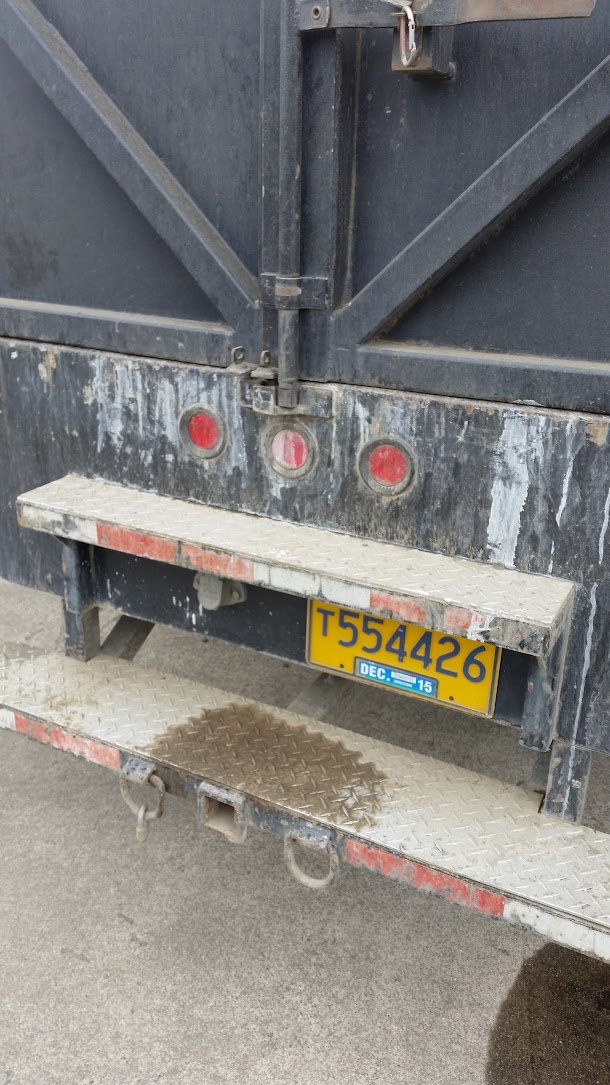
That truck right there....It was parked in Fred Meyer's parking lot (See Video) with Velpar DF in it. It causes irreversible permanent eye damage and I'm in Freddy Meyer's parking lot and it's dripping chemicals.
I know that five-year-old kids walk by trucks and vehicles and they rub their fingers down them and I was astounded.
I went out of the way to park my truck way, way, way in the butt end, of the parking lot at Fred Meyers just so a kid would not walk by and be blinded by what was dripping off of my truck. And it to me....
Rachel Linden, GMO Free News: Yeah, I gotta say, I have two kids. I've seen them to step their feet and splish splash in puddles. I've seen dogs licking things, little puddles of water, I cringe as a mother, thinking "oh my goodness" you know how, how could these leaky trucks and you had video of them leaking, leaking everywhere like a garden hose leaking off the truck. All these chemicals. ..
Darryl: Yep!
Kathleen Hallal, GMO Free News: Darryl would you say that what you saw was sort of common practice? It does sound like that company you were working for might have been the extreme example. Would you say that? Or would you say this sloppy handling of chemicals is kind of common?
Darryl Ivy: Well I have to say that...I can only say what happened to me obviously with Applebee. But, I can tell you right now. That I grew up thinking that the good guys wore white hats and the bad guys had black hats. We knew who people were.
When I handed these videos off and this evidence off to the Oregon Department of Transportation, the Department of Agriculture, OSHA, the FAA and to the EPA, I thought that I was done.
I'm not a whistle-blower.
I thought I did something that everybody else would do that has a moral compass.
I saw something that was really wrong, nobody was doing anything about it, and so I stopped and helped the guy beside the road while other cars pass by.
I went to these agencies and I handed them the evidence and they told me that basically that I'm a white elephant in the room and that I need to go away. At this point, to this day, right now going on six or seven months, the EPA and the FAA still has to weigh in on their findings on this.
So, when you asked, if I think it's common practice or not or Applebees is the lone wolf...?
I have to lean a little in the direction that, these companies are protected, and if they weren't protected, when I came forth with this, these agencies, these guys with the white hats, should have been out there doing their job and instead they wanted me to go away.
So, I have to lean in the direction that maybe this is common practice and maybe, maybe I'm not an isolated incident.
And yes maybe Applebee is extreme with their defective equipment the way they operate but due to the delay in action from the agencies....
Let's just say I felt like I was doing more verbal combat with these agencies than they were questioning me as a victim, actually, felt like I'd done something wrong, when I left these interviews, and I had to do a lot of soul-searching and questioning on what the heck I did I do wrong and I felt bad.
It took a month and a half, two months, for me to really, really get the fire burning in me that I didn't do anything wrong.
These are the guys that sprayed me.
They are the ones contaminating the creeks.
That truck right there....It was parked in Fred Meyer's parking lot (See Video) with Velpar DF in it. It causes irreversible permanent eye damage and I'm in Freddy Meyer's parking lot and it's dripping chemicals.
I know that five-year-old kids walk by trucks and vehicles and they rub their fingers down them and I was astounded.
I went out of the way to park my truck way, way, way in the butt end, of the parking lot at Fred Meyers just so a kid would not walk by and be blinded by what was dripping off of my truck. And it to me....
Rachel Linden, GMO Free News: Yeah, I gotta say, I have two kids. I've seen them to step their feet and splish splash in puddles. I've seen dogs licking things, little puddles of water, I cringe as a mother, thinking "oh my goodness" you know how, how could these leaky trucks and you had video of them leaking, leaking everywhere like a garden hose leaking off the truck. All these chemicals. ..
Darryl: Yep!
Tuesday, October 13, 2015
World Food Day Oct. 16-17 DC Rally and Route Information
A clip from our 1+ hour panel discussion with Alexis Bayden Mayer, political director for Organic Consumers Association (OCA).
Video Transcript:
Alexis: Ok so once that action was called and we knew that the DARK Act was at least in Congress. We did know how far it would go. The Truth in Labeling Coalition and Moms Across America decided to do a lobby day on Friday, Oct 16, and before the Saturday Oct 17 protest and so we've got a lot of events happening the weekend before the DARK Act gets a hearing in the Senate.
So, the timing couldn't be better.
It's really a wonderful time to come to DC. If you live in the DC area, if you can make a drive here in a day, there's no excuse not to be here and if perhaps you can take time away from your family, away from your job, to travel from a longer distance please come.
It is going to be lots of fun.
The only downside of that is Congress is actually in recess next week from the 13th to the 16th. So, its also a good idea if you're involved in your your local dominant parties politics, you might get invites to events your congresspersons, your senators, are going to be and whatever your politics, do get involved in the party because the party does control access to the politicians and you'll rarely know where the politicians are going to be unless you're part of the dominant party in your area.
If you want an opportunity to speak to a politician, a recess is actually really good time for that. So. The Columbus Day recess next week, if you're staying in town, hunt down the politicians in your area and try to speak to your Senator and even your Congressperson. Let them know that you know how they voted on HR 1599 and you're either very happy or very disappointed. So, it's a good time to reach out to the Senate and the Congress and Friday will be a really fun lobby day with the Truth in Labeling Coalition and Moms Across America.
Also on Friday, we're going to do a march on Friday afternoon. So, it'll be around rush hour and will be walking through downtown DC stopping at various points along the way. We're going to be going by the White House, going by the office of the US trade Representative, going by the Chamber of Commerce.
We didn't mention the Chamber of Commerce. But, its worse than the Grocery Manufacturers Association. Because it is all US businesses and they organized like the Farm Bureau down to the local level.
So, if you're any business person no matter how small or progressive, you probably have to be part of the Chamber of Commerce, like, if you're a farmer and you want to get insurance for your farm, you probably have to be a member of the Farm Bureau.
So, the Chamber of Commerce is a very, very big powerful organization and they do the bidding of the largest corporations. It does not represent their small businesses which probably make up the majority of the members. It directly represents corporations like Monsanto.
We have direct evidence that since trade talks have been going on with Europe. the Chamber of Commerce has been putting pressure on European regulators not to move through very important consumer safety regulations related to dangerous pesticides, specifically endocrine disruptors.
The European Union has a new policy on endocrine disruptors that have not been put into place yet because of the US Chamber of Commerce blocking it. Because they say, "well you are going to have to deal with this new trade agreement that probably will preempt a lot of these regulations so you might as well not bother putting out this important public safety regulation at this point to protect kids from endocrine disruptors." So that is the type of thing that we know that the Chamber of Commerce is doing on a regular basis.
So, we are stopping by the Chamber of Commerce and then we're heading to the EPA and I hear that Monsanto the Grocery Manufacturers Association is perhaps on the way to the EPA from Afayette Park where these other locations are. And so, perhaps we'll stop by Monsanto's DC headquarters. The Grocery Manufacturers Association's DC headquarters their lobbying offices. Where they do their DARK Act strategy, no doubt, and then we're heading to the EPA for a rally at 5 p.m.
This I'm really excited about this because about once per month I get together with people who work at other non-profit in DC like Friends of the Earth, Center for Food Safety, Beyond Pesticides and we deliver petitions to the EPA about the pesticides that are killing pollinators and we've delivered literally millions of signatures on petitions to save the bees and the butterflies and EPA is not listening to us and of course there are serious human health problems associated with these pesticides as well.
Zen Honeycutt from Moms Across America will be speaking at the EPA protest talking specifically about glyphosate and why glyphosate needs to be ban and this is an opportune time.
The EPA was supposed to put out its new re-registration for glyphosate in July of this year and they haven't done it yet and I think that they have not done it yet because new information came out that glyphosate is probably causing cancer and the EPA can't sweep this under the rug so easily when the World Health Organization is making these announcements. It's all based on science that has already been published. Its just a new review of it. But, the EPA has always done its own reviews that always, you know, pushed individual papers under the rug and ignored the large body of evidence. But, now the World Health Organization saying very clearly, "yep, it is clear from the evidence that glyphosate is probably causing cancer."
So, obviously human health problems associated with glyphosate, cancer is only the tip of the iceberg and then of course glyphosate harms beef and the glyphosate GMOs Roundup Ready GMOs they are always coated with neonicotinoids, that is a product that's created by Bayer, but Monsanto is more than happy to coat all of its GMOs with neonicotinoids pesticides that we know kills bees and glyphosate is also destroying Monarch butterfly habitat.
Monarch butterfly habitat is the Milkweed. Milkweed has actually survived in the agricultural region of the mid-west the corridor between Mexico and Canada that the butterflies fly through every year.
But, since the advent of the Roundup Ready herbicides, Milkweed is very tough it can survive may be one dosage of herbicides per year. It can survive till up. It generally just gets kind of more distributed if it gets tilled up once a year but it cannot survive repeated doses of herbicides and when they created the Roundup Ready crops they weren't just using round up at the end of the growing season before planting to clear the field they've been spraying roundup continuously on the plant throughout the growing season.
So, our genetically modified Roundup Ready corn and our round-up ready soy is not only increasing our exposure to Roundup but it is increasing the amount of roundup in the environment. It's killed the milkweed and the introduction of Roundup Ready crops had been decimated and that has decimated the butterfly population more than 90 percent loss in the butterfly population since Roundup Ready crops were introduced.
So, this is, you know, we're about to lose a very beautiful iconic species and it is paralleled with the loss of our health and human population. So, you know the Monarch butterfly is worthy on its own, but I think it's also a symbol of the fragility of health in the human population as well.
Rachel Linden: I agree. They are the canary in the coal mine for our environment Hash tag #Epicfail.
Kathleen Hallal: But, I think the other thing too that it's trying to bubble up to the surface is how systematic their programs have been to buy scientists and buy universities and how it's being uncovered now that these big industries especially big Ag but also Pharma and other industries have bought off scientists to published papers for them and then they take these papers into their Representative or Senator and they say vote this way or approve this, you know, this looks greater you know this is a great study and we're finding out that it's sort of like a house of cards. They've just set it up and it hasn't really been studied and on all these problems you bring up deserve real independent scientific attention. We have to stop, as you say “sweeping it at all under the rug.”
Because it is growing and growing and how much longer are we going to ignore this?
Rachel: Biotech genetic engineering was built on lies. It came from lies. It only exists in the dark in the lies and we shine a light on it we talk about it and we bring attention to it...it cannot survive.
Kathleen: They are not telling the truth about scientific consensus. There is not scientific consensus. We know lots of preeminent scientists worldwide who are questioning this. How many scientists have signed the petition Alexis? I think it's like 800 scientists worldwide who are questioning the safety of GMOs and demanding more science.
We're not people who are not science based. We want more science. Please. We want stop pretending that there's not any science that shows harm from glyphosate, Roundup Ready crops, GMO crops, BT.
We want all the products explored further and we want to stop being basically force fed these foods. So, we need to stop the DARK Act. We need to have labeling now and we need more science now.
Subscribe to:
Posts (Atom)